

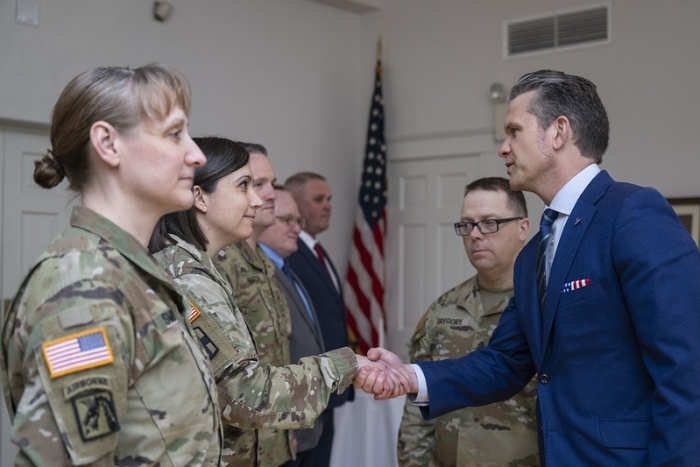
The Pentagon officially reduced the U.S. military’s recognized religion list from more than 200 faiths and worldview groups to 31 on Thursday, according to Military.com.
The May 20 memo, issued at the direction of Defense Secretary Pete Hegseth, ordered the military to revise faith and belief codes within 60 days to “streamline” how the department collects service members’ religious preferences. The new list removes Wiccans, Pagans, Atheists, Druids, and many other minority affiliations from official recognition.
- The Pentagon reduced the military’s recognized faith list from more than 200 affiliations to 31.
- The revision removes Wiccans, Pagans, Atheists, Druids, Humanists, and other minority faith or worldview groups.
- A May 20 memo said the change aims to streamline religious preference collection for chaplain support.
- Critics say the new list could make minority-faith service members harder for chaplains to identify and support.
The restructuring drew immediate concern from advocates and chaplaincy figures

Image credits: U.S. Secretary of War / flickr
The change marks the first official revision to the list since a 2017 memo, cutting the total from roughly 211 affiliations to 31. Military.com reported that Anthony Tata, under secretary of defense for personnel and readiness, signed the May 20 memorandum.
The memo said the department wanted to “streamline the DoW [Department of War] collection of religious preferences for service members to enhance the delivery of targeted religious support from the Chaplaincy.”
The groups no longer listed include Atheists, Asatru, Deists, Druids, Eckankar, Heathens, Humanists, Magick, New Age churches, Pagan, Rosicrucianism, Shaman, Spiritualists, Troth, Unitarian Universalists, and various Wiccan designations.
The restructuring drew immediate concern from advocates and chaplaincy figures who say the codes help identify troops who need specific religious or spiritual support.

Image credits: U.S. Army 126PAOC by Sgt. Ashley Gillons Terpsma / Wikimedia Commons
Hegseth signaled a broader shift months earlier. In December 2025, he said he wanted “to make the Chaplain Corps great again” and described a “top-down cultural shift” that would put spiritual well-being on the same footing as physical and mental health. In March, he announced Chaplain Corps reforms, including fewer faith-code affiliations and the replacement of rank insignia on chaplain uniforms with religious insignia, according to the department’s own announcement.
Tata wrote that service members will not be limited to the “religious affiliation codes” when selecting information for their dog tags.
Critics say that distinction does not solve the practical problem. A former U.S. Army chaplain who now serves as an endorser told Military.com the revised list is “horrible,” arguing that troops who cannot be identified by affiliation may struggle to receive the support they need.
“There’s a lot of faith groups out there that I particularly don’t have an interest in, but there are service members who are sending their sons and daughters into the military, and they’re expecting pastoral care for their sons and daughters as needed — and I don’t think they’re going to get it.”
Critics say the revised list could make it harder for minority-faith service members to be reached
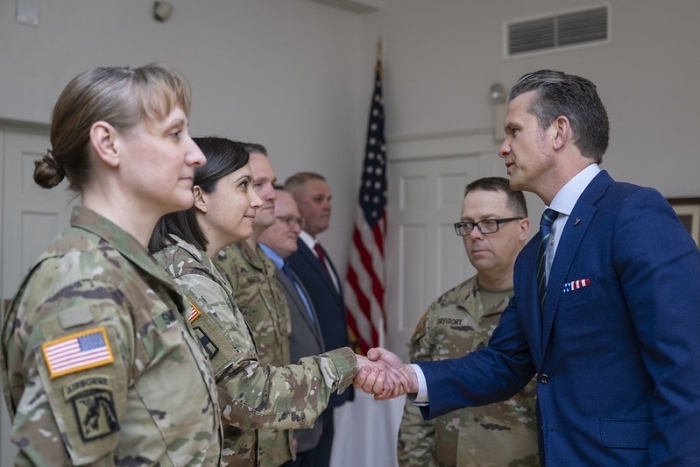
Image credits: U.S. Secretary of War / flickr
Mikey Weinstein, co-founder of the Military Religious Freedom Foundation, issued one of the sharpest responses. In a statement posted by MRFF, he called the reduction a “middle finger to the United States Constitution’s separation of church and state.”
“Reducing the number of religious faiths from hundreds down to 31 is another absolute, clear, filthy and disgusting, unconstitutional, immoral and unethical attempt to force only the approved solution, getting closer and closer to Christian nationalism.”
Hemant Mehta, writing on the Friendly Atheist Substack and quoted by Religion News Service, argued that the longer list served a practical purpose.
“There are good reasons to include (more faiths), not just for accuracy, but because it makes it easier for people of minority beliefs to get the help they need.”
Mehta also criticized an unofficial list circulating online, saying: “This looks like a list made by Christian nationalists who have no awareness of the world that exists outside their bubble.” Religion News Service also reported that the DOD did not respond to its request for comment.
An anonymous Army veteran and ordained Wiccan/Druid cleric told Military.com that the loss of specific codes could affect troops who seek care after trauma. The cleric said, “Having appropriate spiritual care is paramount for their well-being. Stripping these codes … puts them at a risk of being re-traumatized or re-abused without it being intentional.”
Poll Question
Thanks! Check out the results:
Subscribe to Access
Exclusive Polls

By entering your email and clicking Subscribe, you're agreeing to let us send you customized marketing messages about us and our advertising partners. You are also agreeing to our Privacy Policy.
Thank you! You've successfully subscribed to newsletters!


30
0